Character Over Conference Suites: Planning a Kent Away Day That Stays in the Memory
Photo: Dialh, CC BY 4.0, via Wikimedia Commons
Every organiser has sat in the same room: beige carpet, a projector on a bracket, windows that do not open, and a lunch that arrives at 12.45 in identical trays. It works. It is also entirely forgettable, and a strategy day that nobody remembers has usually cost as much as one that people talk about for a year. A private house offers a different proposition — not because historic buildings are inherently better for thinking, but because they change the register of the day.
Why the setting does more than the slide deck
A manor house gives a team three things a conference hotel rarely can: a sense of arrival, a change of scene, and exclusive use. Guests drive through a gate rather than into a multi-storey car park. The room is theirs alone for the day, which means the flip chart can stay up at lunch and no one has to vacate for a wedding at four. That continuity matters more than it sounds — conversations resumed across a coffee break are where off-sites earn their keep.
Choosing a format that fits the building
Heritage rooms are not infinitely flexible, and the honest organiser plans around that rather than discovering it on the morning. Principal reception rooms tend to suit boardroom and horseshoe layouts for 12 to 30 people; larger drawing rooms can take cabaret or theatre seating; smaller adjoining rooms make excellent syndicate spaces and, just as usefully, quiet rooms for calls. Ask for a measured floor plan with the door swings and radiators marked, and be realistic about sightlines — a pillar in the wrong place will make half the room feel like spectators.
AV, Wi-Fi and the conversation to have early
Connectivity is where expectations most often diverge. Ask, in writing, what the house provides and what you must bring: screen, projector, sound, microphones, clickers, cables, adapters. If the day involves hybrid participation, request a hard-wired connection and arrange a rehearsal on site rather than on the morning. Rural Kent is not a broadband desert, but listed walls and thick stone do have opinions about signal, so test mobile coverage and consider bringing a 4G or 5G router as a fallback. Confirm how anything is fixed — a heritage venue will be understandably cautious about tape, pins and cable routes — and agree in advance where equipment may be rigged.
Catering that keeps the pace
Food is a scheduling instrument. Arrival coffee and something small sets the tone; a mid-morning break at a fixed time prevents the room from flagging before the difficult session; lunch should be substantial but not soporific, and served in a different room if possible, so that people physically move. An afternoon refuel of fruit and coffee at three is worth more than a larger lunch at one. Give the kitchen dietary requirements, timings and the number of confirmed attendees a week out, and agree how breaks will be signalled so that catering and facilitation are not working against each other.
The break that earns its place
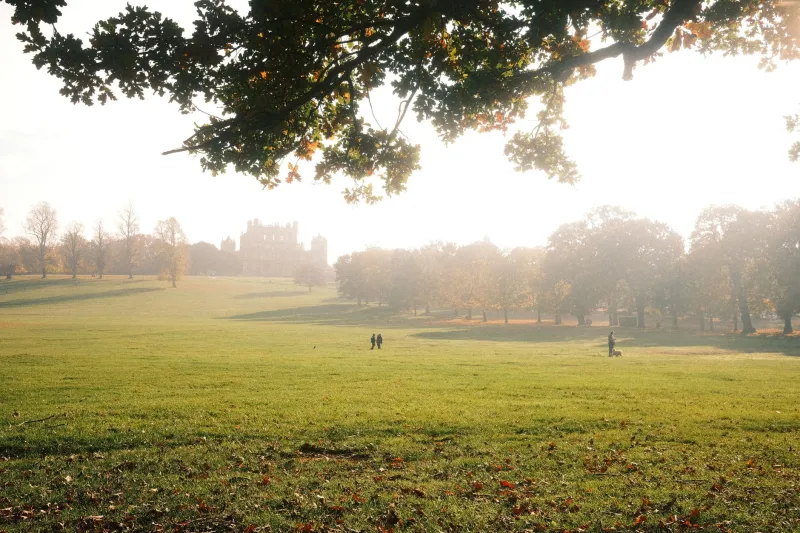
A guided tour of a house like Wickham Court works best when it is short, structured and optional — twenty to thirty minutes, led by someone who can tell the story rather than recite dates, and placed deliberately at the point in the day when concentration dips. Framed as a change of scene and a chance to walk, it does what a fourth coffee cannot: it resets the room. Framed as mandatory entertainment, it becomes a gimmick and a source of quiet resentment. Give people the choice, keep it tight, and resist the temptation to make it a treasure hunt.
The practical questions organisers ask
Travel. Kent is well served by rail from London and the South East, but the last mile matters; publish station-to-venue taxi arrangements in advance and check whether a coach can turn and park on site. Accessibility. Ask specifically about step-free routes, accessible WCs and hearing loops — listed buildings vary enormously, and a straight answer early is worth more than a promise later. Timings. Agree arrival and departure windows with suppliers and the venue, and build in half an hour's buffer before the first session for the inevitable. Budget. Compare on total cost per head including room hire, AV, catering, service and any exclusivity fee, rather than on day rate alone. Lead time. Popular months book early, so approach a house with two or three dates in mind rather than one.
Making the day stick afterwards
Close the loop. Circulate photographs, a short summary of decisions and owners, and the date of the follow-up review within a week, while the room is still fresh in people's minds. A team that spent a day somewhere with character tends to hold the memory longer — and the next time someone proposes a beige conference suite, someone else will suggest going back to the house instead.