The Art of the Small Wedding: Why Fewer Guests Can Mean More at Wickham Court
There is a persistent assumption in wedding planning that a smaller guest list represents a compromise. The marquee is smaller, the band is replaced by a playlist, and the whole affair is treated as a scaled-down version of the real thing. At a historic manor such as Wickham Court, the opposite is often true. A wedding of thirty to fifty guests does not shrink the occasion; it changes its nature. The rooms become more legible, the catering more personal and the day itself less hurried. For couples who want a wedding that feels generous rather than grand, the intimate ceremony is not a concession. It is a design choice.
A Different Kind of Occasion
A large wedding is, in part, an exercise in logistics. Guests arrive in waves, rooms are arranged for maximum capacity, and the couple’s time is divided among tables, groups and well-wishers. A smaller wedding allows for a different rhythm. There is time to speak to every guest properly. The drinks reception does not need to be a crush. The wedding breakfast can be a long, unhurried meal rather than a service delivered to a schedule.
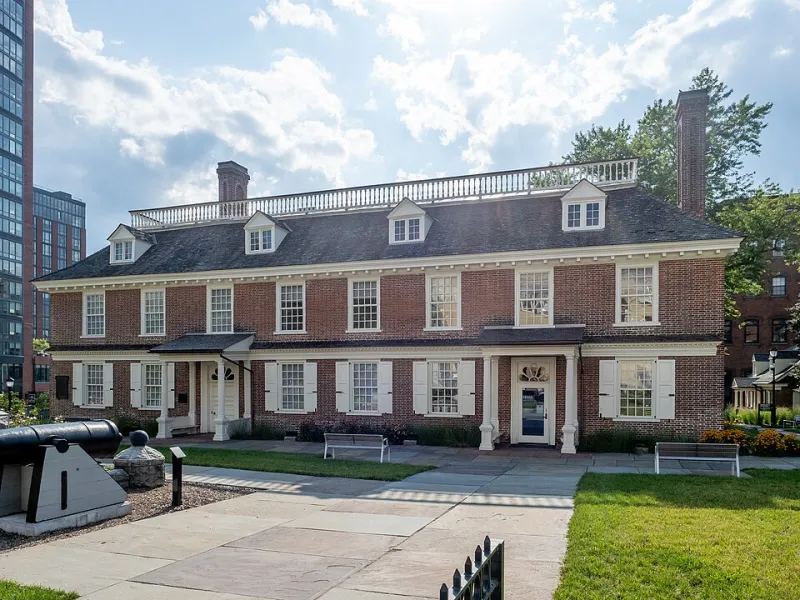
At Wickham Court, this shift is felt most clearly in the way the house is used. The Great Hall, with its timber roof and stone walls, can accommodate a substantial gathering, but it can also be arranged for a ceremony of forty with an ease that larger numbers do not permit. The space around the guests becomes part of the occasion rather than something to be filled. The same is true of the drawing rooms and the terrace: they work best when they are allowed to breathe.
Choosing Spaces That Breathe
For a compact wedding, the temptation is to use only one room and keep everything in one place. In practice, a gentle movement through the house works better. A ceremony in the Great Hall, drinks in the drawing room or on the terrace, and a meal in a panelled dining room gives guests a sense of occasion without requiring them to walk great distances. Each room change marks a change in mood.
It is worth resisting the urge to seat everyone in the largest available space simply because it is available. A room arranged for fifty when only thirty-five are expected will feel underpopulated, however beautiful its proportions. Wickham Court’s smaller rooms, by contrast, become intimate rather than cramped when the guest list is modest. The house has a way of making a small party feel properly hosted.
Catering for a Table, Not a Crowd
Catering is where the small wedding gains most. A menu designed for forty guests can be more precise and more seasonal than one designed for a hundred and fifty. Kent has a deep larder — asparagus in spring, soft fruit in summer, game and root vegetables in autumn — and a smaller wedding makes it practical to build a menu around what is genuinely at its best rather than what can be produced at volume.
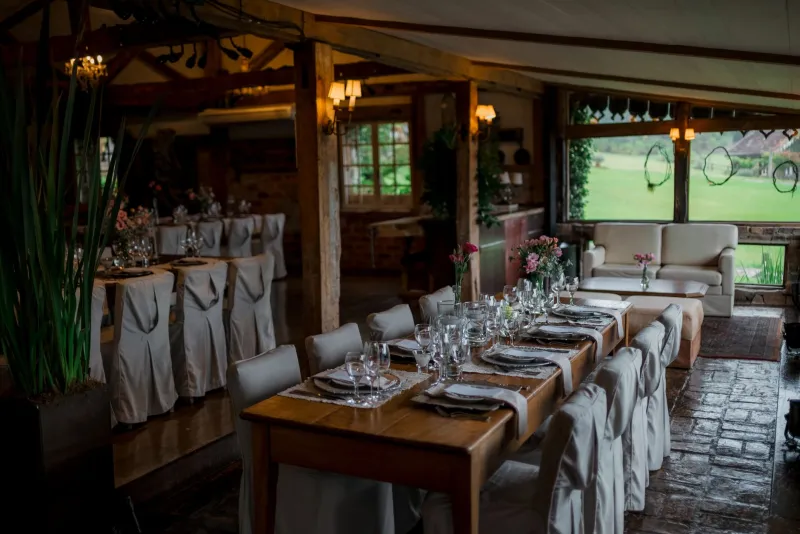
A long table, or a small cluster of tables, changes the atmosphere of the wedding breakfast. Guests can hear one another. Speeches do not need amplification to reach the back of a large room. The serving itself can be calmer, with fewer plates moving at once and more attention to each course. Many Kent-based caterers who work with historic houses prefer this scale of event for exactly these reasons: it allows for proper cooking rather than assembly.
Photography With Room to Wait
A photographer working with a smaller wedding has an advantage that is easy to overlook: time. There is no need to organise a large group into a formal line-up within a narrow window. The couple can step away for portraits without feeling they are abandoning their guests. The house and grounds can be used more thoughtfully — a few minutes in the walled garden, a quiet corner of the terrace, the fall of light through a particular window.
Wickham Court rewards a slower approach to photography. The building has texture and shadow that suit natural light, and the surrounding Kent countryside offers a useful counterpoint to the formal rooms. For a small wedding, a photographer who is comfortable working unobtrusively is often a better fit than one accustomed to directing large groups. The resulting images tend to feel like a record of the day rather than a production.
Suppliers Who Suit a Compact Celebration
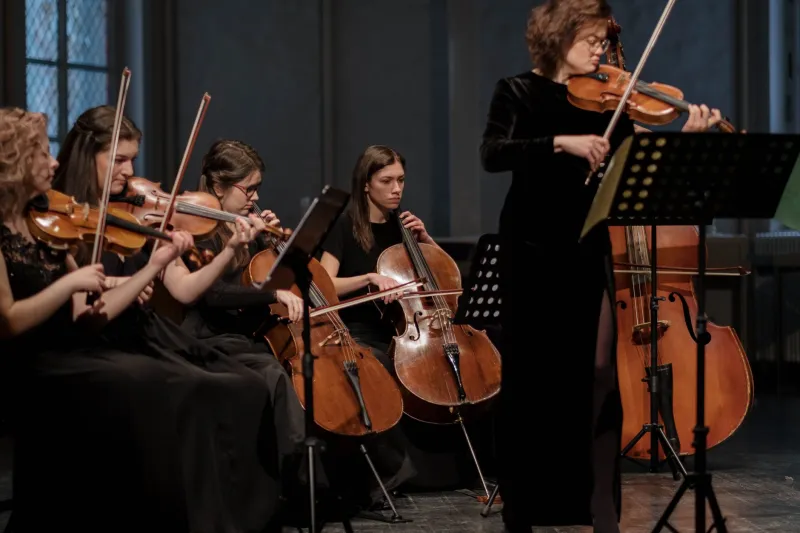
A smaller wedding does not require fewer suppliers, but it does require suppliers who understand scale. A single florist can create more impact with a few well-placed arrangements than with a room full of flowers. A string duo or a pianist can provide atmosphere without dominating a modest space. A small independent caterer, used to working in private houses, will often be more adaptable than a large events company.
The local area is well served for this kind of planning. Bromley, Beckenham, Sevenoaks and Tunbridge Wells all have experienced wedding suppliers accustomed to manor-house weddings, and many will travel the short distance to Wickham Court. The practical benefit is not only familiarity with the venue but a shared understanding of what a smaller celebration requires: flexibility, discretion and an eye for detail rather than volume.
The Generosity of Less
A wedding with fewer guests is not a retreat from hospitality. It is a different expression of it. The couple can offer their guests more attention, more time and a more considered setting. At Wickham Court, the house itself becomes easier to read: the proportions of the rooms, the history in the walls and the quiet of the grounds all come forward when they are not crowded out.
For couples weighing up the guest list, the question is not whether a small wedding can feel special. It is whether a larger one is actually necessary. Thirty-five guests in the right rooms, with the right menu and an unhurried schedule, can feel more generous than a hundred and fifty in a space designed for scale. The small wedding is not a compromise. It is an invitation to use the house properly.