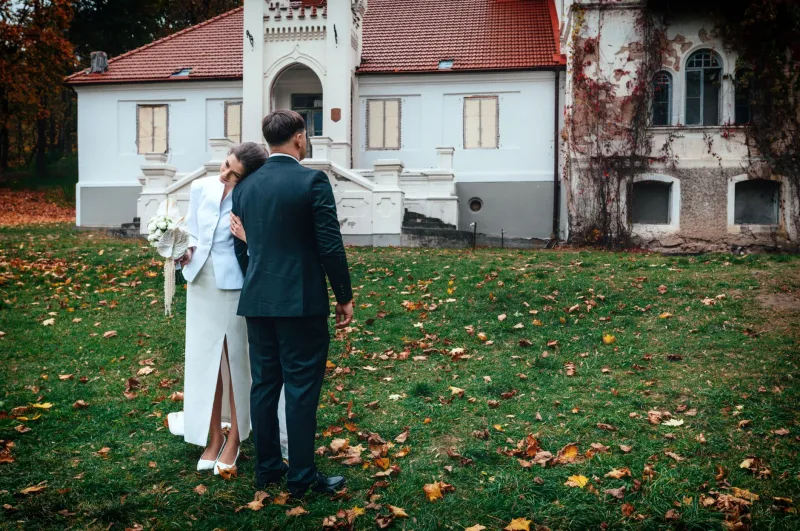
The House Remembers: Seven Overlooked Details That Tell Wickham Court’s Kentish Story
Photo: Elisa.rolle, CC BY-SA 3.0, via Wikimedia Commons
A venue can be handsome and still say very little. Wickham Court is not that kind of place. Walk through its rooms slowly and you begin to notice a layer of evidence beneath the polish: a scratch beside a fireplace, a change of brickwork, a door that no longer opens where it once did. These are not museum exhibits behind glass. They are the ordinary residue of people who lived and worked here, and they are one of the reasons Wickham Court feels less like a backdrop and more like a participant in the day.
You do not need to be a historian to read them. You need only a little curiosity and the willingness to look up, down and sideways. Here are seven details to spot, and what each reveals about Kent’s past.
1. Scratch marks beside the hearth
Look closely at the oak near an old fireplace and you may find fine lines, circles or repeated V-shaped cuts. These are often apotropaic marks — marks intended to turn away misfortune — and they are remarkably common in historic houses across Kent and the Weald. Some take the form of daisy wheels, scratched with a compass or a nail; others are simple crosses or letters. They were not the work of master carvers but of ordinary people who wanted a little protection for the room where fire, food and family came together.
What they reveal is a world in which religion, superstition and domestic routine were closely woven. A Kentish household in the sixteenth or seventeenth century did not separate the practical from the spiritual. The hearth was the heart of the home, and the marks beside it are a reminder that the people who lived here worried about the same things we do: safety, health, and the fragile business of keeping a family well.
2. Linenfold panelling with a story in its folds
Linenfold panelling is one of the great survivors of Tudor interior fashion. Its carved folds imitate the drape of cloth, and at Wickham Court, as in many Kentish manor houses, it speaks of status and comfort in equal measure. Oak was the local timber of choice, drawn from the woods that made Kent famous for shipbuilding and housebuilding alike. To line a room in carved oak was expensive; to do it well was a statement.
Look for variation in the carving. No two folds are quite identical, because this was hand-work rather than machine-work. The panelling tells you that the house was not simply built for shelter; it was finished for display. It also gives modern visitors a useful lesson in how heritage interiors actually work. The past was not uniformly dark and draughty. People warmed their rooms, softened their walls and made their homes handsome with the materials around them.
3. The ghost of a doorway
On some walls you can find the faint outline of a former opening: a change in plaster, a line of brickwork, a patch where a door once hung. These are among the most eloquent details in any old house, because they show that the building has been altered, adapted and argued with over time. A doorway may have been blocked to create a larger room, or moved to improve circulation, or closed when a service wing changed use.
For Kent, this is a familiar story. Manor houses were not frozen in the year they were built. They were working buildings, and their owners responded to fashion, fortune and family need. The ghost doorway at Wickham Court is a small reminder that heritage is not a single moment preserved intact. It is a long conversation between generations, and every generation has left its accent on the walls.
4. Brickwork that patterns the past
Stand back from the exterior and look at the brickwork. You may notice patterns formed by contrasting bricks — diamond diapers, bands or subtle changes of colour. This is not random. It is a deliberate decorative scheme, and it points to the Kentish clay industry and the growing confidence of brick as a building material. In the medieval and early modern periods, brick was a sign of ambition. It was expensive to make, transport and lay well.
The chimney stacks deserve attention too. A great chimney was both practical and symbolic: it carried smoke away, kept rooms warmer and announced that the household could afford fuel and fireplaces. In a county where agriculture, woodland and trade all shaped the local economy, such details connect the house to the land and labour that made it possible.
5. Heraldic glass and the marriage market
If you find old glass with coats of arms or fragments of heraldic colour, pause. Glass was costly and fragile, and heraldic panels were often used to record family alliances. In a Kentish gentry house, a marriage was not only a personal matter; it was a union of estates, names and interests. The arms in a window could act as a family tree in miniature, visible to every visitor who knew how to read it.
For couples planning a wedding today, there is an obvious pleasure in this. You are not the first people to make promises in a house like this, and you will not be the last. The heraldic glass is a reminder that marriage has always been partly private and partly public: a vow between two people, and a statement to the wider world.
6. A beam that has been reused
Look at the timber frame and you may spot a beam that does not quite match its neighbours: different grain, different age, perhaps a joint that no longer serves a purpose. Reused timber is common in old buildings. Wood was valuable, and when a structure was altered or an older building dismantled, good beams were salvaged and put back to work.
This is heritage at its most practical. It reveals a culture of repair and economy, not wasteful demolition. It also makes the house feel more human. The people who adapted Wickham Court were not thinking about how it would look in a guidebook centuries later. They were thinking about cost, weather and the need to keep the roof on. That ordinary pragmatism is part of the venue’s charm.
7. Mason’s marks and the names of makers
Finally, look for small marks on stone or brick: simple symbols, initials, perhaps a date. These are often the signatures of the people who built and repaired the house — masons, carpenters, labourers whose names rarely appear in the record. They are easy to miss, and that is precisely why they matter. They shift the story away from the owners and towards the makers.
Kent’s historic houses were built by many hands, and those hands left traces. A mason’s mark is a tiny act of self-assertion, a way of saying: I was here. For anyone booking a private event or a wedding at Wickham Court, that is a useful thought. The house is not simply a setting for one day. It is a place where generations have worked, celebrated and left their mark — and your event becomes part of that continuing story.
The pleasure of these details is that they are not packaged. They reward attention. A couple choosing a venue, an organiser planning a private hire, or a local visitor curious about heritage on the doorstep can all share the same experience: the moment when a mark on a beam or a line on a wall becomes a story. Wickham Court does not present its history as a lecture. It invites you to read the house for yourself.