What the Ledger Remembers: Drawing a Wedding from Wickham Court’s Archive
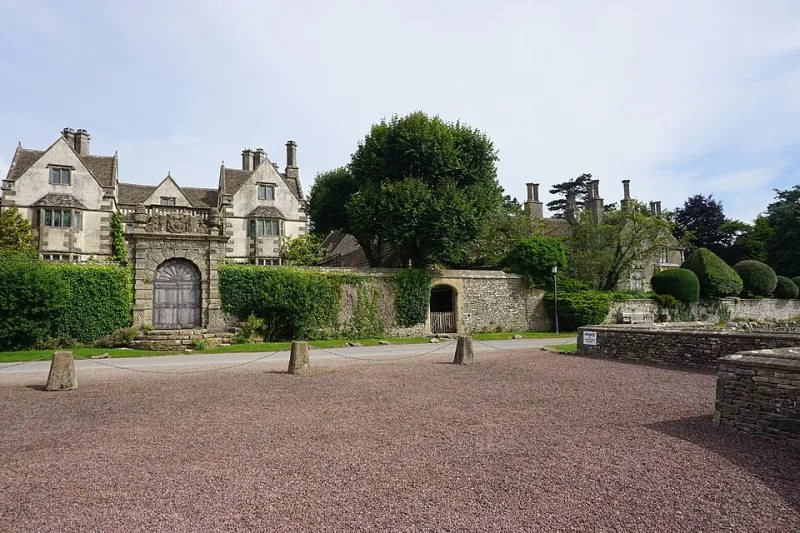
Photo: Bill Boaden , CC BY-SA 2.0, via Wikimedia Commons
A historic house is never merely a backdrop. At Wickham Court, the building carries centuries of domestic life in its stonework, its rooms and its paper trail. For couples planning a wedding, that record offers something rarer than decoration: a way to make the day feel particular to this place, rather than portable from any other venue. The archive is not an ornament to be raided for aesthetic effect. Used with care, it can act as a quiet collaborator — informing wording, guiding detail and lending the celebration a sense of continuity with the house itself.
Why the Archive Matters to a Wedding
Most wedding planning begins with colour palettes and floor plans. A heritage-led approach begins with evidence. Estate maps, household accounts, correspondence, photographs and architectural drawings can reveal how rooms were used, which families passed through, how the gardens changed and what ordinary celebrations once looked like. These are not merely facts for a display board. They are prompts. A name in a ledger might suggest a table name; a line from an old inventory might inform a reading; a pattern in a floor tile might inspire an invitation motif.
The value lies in specificity. A generic nod to “history” is quickly forgotten. A detail drawn from the house’s own records gives guests something to ask about, and gives the couple a story that belongs to the venue rather than to a mood board.
Looking for the Human Detail
Couples need not arrive as trained archivists. The most useful starting points are often the most domestic. Look for references to meals, servants, children, visitors, seasonal routines and local trades. Household accounts can show what was bought and when; correspondence can reveal the tone of family life; photographs can suggest how rooms were furnished and used. Architectural plans may explain an awkward corner or a later addition, while maps of the wider estate can connect the house to lanes, farms and Kentish parishes nearby.
It is worth resisting the urge to chase only the grandest names. A wedding gains more from a modest, well-evidenced detail than from a sweeping claim. If a particular room was once used for morning calls, that may shape how you use it for welcome drinks. If an old account book records specific flowers or produce, that may inform table arrangements or favours. The aim is not to stage a period drama, but to let the house’s own life inform the day.
From Finding to Feature
The transition from archive to wedding should be deliberate. An invitation suite, for example, might borrow a typographic style from an old document, or reproduce a small architectural motif found in the house. Readings can include a short extract from a letter or memoir, provided the tone suits the ceremony and the text is presented with context. Table names might follow rooms, estate features or local place names recorded in the house’s papers, each accompanied by a brief note explaining the connection.
Favours benefit from restraint. A small printed card with a line from a household book, a seed packet tied to a garden recorded on an estate map, or a bookmark reproducing a detail from a photograph can be more memorable than a novelty item. Ceremony wording, too, can absorb heritage without becoming antiquarian. A sentence acknowledging the room’s earlier uses, or a reading chosen because it echoes a theme found in the archive, can give the ceremony a sense of place without turning it into a lecture.
Working Respectfully with a Living-History Venue
Wickham Court is not a museum set. It is a working venue with weddings, private hire and conservation responsibilities. Research requests should therefore be made in good faith and with reasonable notice. Couples should be clear about what they hope to find, accept that not every query will yield a usable answer, and avoid asking staff to become a full research service. Where documents are fragile or uncatalogued, access may be limited. In such cases, a photograph or a summary may be offered instead.
There is also a question of tone. Historical material can include difficult subjects, and not every record is suitable for a celebration. Couples should be guided by context and sensitivity, avoiding jokey uses of serious material or decorative quotation of text whose meaning they do not understand. The house’s history should be treated as a living inheritance, not as a costume.
A Practical Checklist for Research Requests
- Define the purpose. State plainly whether the research is for invitations, readings, table names, favours or ceremony wording.
- Give a date range. A focused request is easier to answer than a broad one.
- Name the rooms or features involved. Mention any architectural details, gardens or spaces that particularly interest you.
- Ask what already exists. A summary or existing display may answer the question without a new search.
- Request a short research window. Ask what notice is realistic and whether a brief appointment is possible.
- Confirm what may be reproduced. Check permissions for photography, copying and printed use.
- Allow for gaps. Accept that some questions will remain open, and be willing to work with what the record offers.
- Share the result. If an archive find shapes your day, tell the venue. It helps staff understand what is useful and keeps the house’s story in circulation.
A Collaboration, Not a Theme
The most successful heritage-led weddings are not those with the most historical references. They are the ones where the references are well chosen, lightly worn and clearly explained. Wickham Court’s archive can supply texture, language and local connection, but it works best when couples treat it as a partner in planning rather than a prop. The result is a wedding that feels at home in the house — and a house that, for one day, is allowed to remember aloud.