Why the Manor House Is Outbuilding the Barn: Kent Weddings in 2026 and 2027
For years the Kent wedding conversation began with a barn. Converted timber, festoon lights, a long table in a field: it was a winning formula, and for good reason. Barns offered informality, space and a welcome escape from the formality of a hotel ballroom. But in 2026, with 2027 diaries already filling, something has shifted. Couples are not abandoning rustic romance; they are looking for a different kind of character. They want rooms with genuine age, gardens that work in all weathers, and a venue that feels less like a styled set and more like a place with a life of its own.
That is the case for the historic house — and, more particularly, for the restored manor house or court venue. In Kent, where barns are plentiful and beautiful, this is not a rejection of the countryside. It is a refinement of taste. Couples are asking for heritage, flexibility and a story that does not begin and end with a marquee.
The barn has become a victim of its own success
Barns are still lovely. But familiarity has its costs. The design vocabulary of the barn wedding — bare boards, hay bales, fairy lights, a marquee extension — is now so well known that it can feel less like a discovery and more like a template. More practically, many barns have limited indoor ceremony space, variable acoustics and a dependence on temporary structures. In a Kentish winter, or a wet June, that can mean decisions made around the weather rather than around the couple.
None of this makes barns a bad choice. It simply explains why some couples are looking for something with more layers. A historic house offers the same rural setting but with rooms that have been tested by centuries of English weather. It offers shelter and romance in the same building.
What couples mean by character
Character is a much-abused word in wedding marketing. At a genuine historic venue it means something specific: irregular walls, worn floors, old glass, fireplaces that have warmed generations, and the sense that the building has seen more than one kind of celebration. A manor house is not a blank canvas, but it is not a museum either. The best heritage venues are flexible enough to hold a ceremony, a dinner and a party without feeling as though you have hired a film set.
For couples, the appeal is emotional as well as aesthetic. A barn can be beautiful, but a house has accumulated memory. Vows exchanged in a room with centuries of family history carry a different weight. Photographs taken on an old staircase or in a walled garden have a depth that comes from the building itself. This is not about pretending to be aristocratic. It is about choosing a place that feels real.
All-weather gardens and the Kentish climate
Kent is the Garden of England, but it is also England. Rain is not a remote possibility; it is part of the planning. Historic houses tend to offer a stronger wet-weather plan than a field-and-marquee arrangement: drawing rooms, halls, staircases, verandas and garden rooms can absorb guests without the event collapsing into a single crowded tent. Gardens can be used when the sun appears and admired from indoors when it does not.
This is a practical advantage that couples often underestimate until they attend a soggy wedding. A venue with genuine indoor space gives you options. You can move the drinks reception, regroup for photographs, and keep older guests comfortable. Romance is easier to sustain when no one is pretending that a leaking marquee is part of the charm.
Private hire flexibility
Manor houses and court venues are increasingly set up for exclusive private hire, which suits the modern couple who wants control without chaos. Exclusive use means the venue is yours for the day, and often for the weekend. It allows for a ceremony, meal and evening party in different rooms, and it gives suppliers room to work without colliding with other events.
Couples should still ask the right questions. Is the ceremony licensed in the room you actually want? What is the noise curfew? Is there a preferred catering list, or can you bring your own team? Are there accessible routes between the ceremony, reception and gardens? The romance of a historic house is real, but it should be matched by clear terms and a venue team who know how to make old buildings work for modern events.
Sustainability without greenwash
The environmental argument for heritage venues is strong, provided it is stated honestly. The greenest building is often the one that already stands. Reusing a historic house avoids the embodied carbon of new construction, and many old buildings are already well suited to local supply chains, seasonal food and smaller-scale celebration. Reusing, repairing and adapting is part of the sustainability story.
That does not mean every old building is automatically green. Couples should ask about heating, waste, travel and catering. But there is a genuine case for choosing a venue that has already spent centuries in place. A barn conversion can share those virtues; a new-build marquee village generally cannot. In 2026 and 2027, couples are more alert to these distinctions, and they are right to be.
The romance of centuries
There is also the simple, unquantifiable pleasure of a house that has been lived in. A garden that has matured. A staircase worn smooth by footsteps. A fireplace that has framed family portraits and Christmas lunches and arguments and reconciliations. You cannot manufacture that atmosphere, and you cannot install it in a barn.
For a wedding, this matters. Couples are not just booking a room; they are booking a mood. They want the day to feel rooted, generous and a little bit magical. A historic house supplies that sense of occasion without needing to dress itself up as something it is not. It is already itself.
A practical checklist: barn versus historic house
Before booking, compare like with like. Ask whether the ceremony space is licensed and how it feels when full. Check the wet-weather plan in detail, including where guests will gather if the gardens are out of bounds. Confirm exclusivity and curfew. Look at accessibility across the site, not just the main entrance. Ask about catering flexibility, power, parking, accommodation and supplier access. Visit in the afternoon and, if possible, in poor weather. A venue that looks wonderful in sunshine may reveal its limitations in rain.
Then ask the less practical question: can you imagine the day here? Not the styled photographs, but the actual day — the quiet moment before the ceremony, the noise of the dinner, the last guests drifting out under the lights. Historic houses tend to answer that question well.
Why Wickham Court fits the 2026 and 2027 mood
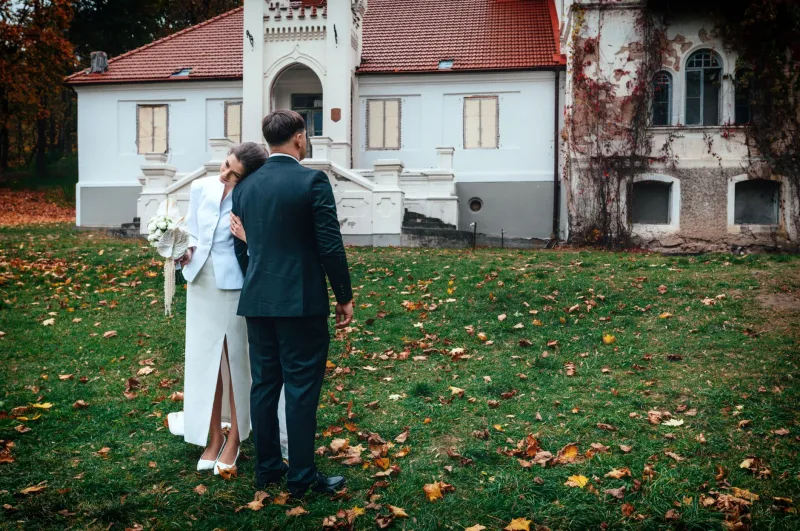
At Wickham Court, the past is not a theme laid on for effect. It is the fabric of the place. The house carries its Kentish history in its beams, bricks and rooms, and it offers the kind of private-hire flexibility that modern couples need. It is a venue for people who want a wedding with depth, a garden that can be enjoyed in more than one season, and a setting that feels connected to the county around it.
The barn will always have its admirers, and rightly so. But the manor house is having a moment. For couples planning in 2026 and 2027, the appeal is clear: heritage, honesty and a day that belongs to a place with a past — and a future.